| The Law Office of Stanley D. Bowman
top |
| 700 N. Pacific Coast Highway Suite 202-A,
Redondo Beach, CA 90277 |
| Telephone (310) 937-4529 Fax
(310) 937-4440 |
|
Back to Home |
|
|
Practice
Specialty: Bankruptcy
|
|
If you’re struggling with debt, you may be wondering whether bankruptcy
is the right step. Bankruptcy is a process under federal law that can
give people a fresh start when debt becomes unmanageable. But because
you live in California, state law also plays a big role — especially in
deciding what property you can keep. Here’s a clear look at the pros
and cons to help you understand your options.
Bankruptcy can be a powerful tool to stop creditor harassment, protect
your home, and wipe out overwhelming debt. But it also comes with
long-term consequences for your credit and finances. Because both
federal and California law apply, choosing the right type of bankruptcy
and the right exemption system is critical.
Creditors have
certain restrictions of them when trying to collect on a debt. That’s
where legal guidance makes all the difference. An experienced
attorney will help you understand your options, protect what matters
most, and decide whether bankruptcy is the right path for you. When you are ready, call
the Redondo Beach office at (310) 937-4529. Stan Bowman will
explain to you what are rights, and, as your attorney, Stan will insure
those rights are enforced.
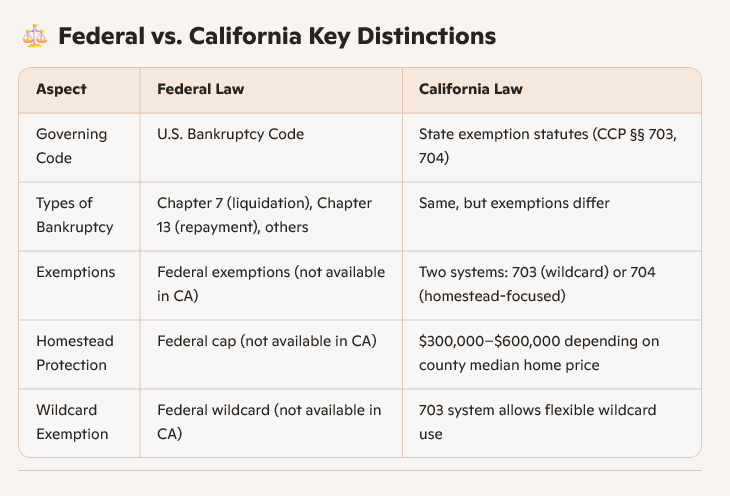
There are differences between federal bankruptcy law and California
bankruptcy law. The chart below explains the main differences
between the two. |
 |
|
|
|
Comparing Chapter 7, Chapter 13, and Chapter 11 Bankruptcy
|
|
|
|
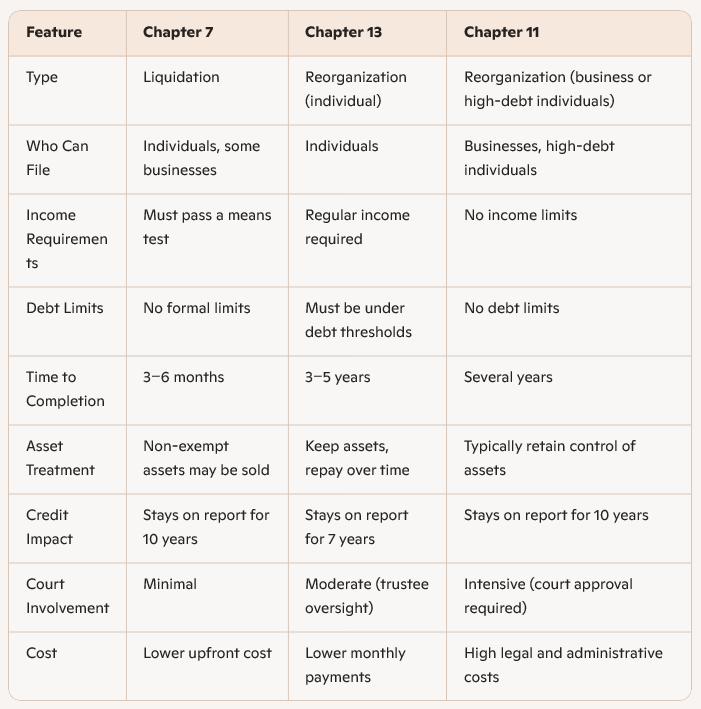
Bankruptcy isn’t one-size-fits-all. The U.S. Bankruptcy Code
offers different chapters depending on your income, assets, and goals.
Choosing the right chapter depends on your income, assets, and goals.
Whether you’re seeking a clean slate, a structured repayment plan, or a
way to reorganize a business, each chapter offers a distinct path
forward. The table below summarizes the similarities and
differences between Chapter 7 bankruptcy, Chapter 13 bankruptcy, and
Chapter 11 bankruptcy. |
|
|
 |
|
|
|
Key Similarities between Chapter 7, Chapter 13, and and Chapter
11 Bankruptcy |
✓
Federal Protection:
All three chapters are governed by
federal law and trigger the automatic stay, which stops creditor actions
immediately. |
✓
Debt Relief:
Each chapter offers a way to manage or
eliminate debt, depending on your financial situation. |
✓
Court Supervision:
All require filing with a bankruptcy
court and following legal procedures. |
|
|
|
Key Differences between Chapter 7, Chapter 13, and and Chapter
11 Bankruptcy |
|
Chapter 7 is best for individuals with
low income and few assets who want a fast discharge. It’s often called
“straight bankruptcy” and involves liquidation of non-exempt property. |
|
Chapter 13 suits individuals with steady
income who want to keep their property and repay debts over time. It’s
ideal for catching up on mortgage or car payments. |
|
Chapter 11 is primarily used by
businesses or individuals with complex finances. It allows for custom
reorganization plans but involves more court oversight and higher costs. |
|
|
Pros
and Cons of Filing for
Bankruptcy
|
|
The Benefits of Filing Bankruptcy
|
✓
Immediate Relief From Creditors
As soon as you file, the “automatic stay”
goes into effect. This means creditors must stop calling, sending
letters, garnishing wages, or moving forward with lawsuits and
foreclosures. |
✓
Debt Forgiveness
Many
unsecured debts—like credit cards, medical bills, and personal
loans—can be wiped out in Chapter 7 bankruptcy. In Chapter 13, you
can reorganize your debts into a manageable repayment plan.
|
✓
A Fresh Start
Bankruptcy is designed to give honest people a chance to reset their
finances and move forward.
|
✓
Protecting Your Property in California
California law lets you keep certain
assets through exemptions. Depending on your situation, you can
choose between two systems:
|
•
Homestead-focused (System 1):
Protects home equity.
Currently between
$300,000 and $600,000, depending on your
county. |
•
Wildcard-focused (System 2):
Offers flexibility to protect cash,
savings, or other property if you don’t own a home. |
✓
Catch Up on Important Debts
Chapter 13 allows you to catch up on
mortgage payments, car loans, or taxes over time, while keeping your
property.
|
The Drawbacks of Filing Bankruptcy
|
✓
Impact on Credit
A bankruptcy stays on your credit report
for up to 10 years (Chapter 7) or 7 years (Chapter 13). This can
make it harder to get loans or credit cards in the short term.
|
|
✓
Not All Debts Go Away |
|
Some debts—like child support, alimony, most student loans, and
certain taxes—cannot be discharged. |
|
✓
Risk of Losing Property |
|
In Chapter 7, property that isn’t protected by California’s
exemptions may be sold to pay creditors. |
|
✓
Public Record
|
|
Bankruptcy filings are public, which means employers, landlords, or
lenders could see them. |
|
✓
Costs and Commitment |
|
Filing involves court fees, required counseling courses, and
attorney’s fees. Chapter 13 cases also require sticking to a strict
repayment plan for 3–5 years. |
|
|
|
Bankruptcy in a Nutshell |
Bankruptcy is a federal process that can
stop creditor harassment, wipe out many debts, and give you a fresh
start. In California, special exemption rules help you protect your
home, savings, or other property. The Upside: Relief from
lawsuits, wage garnishments, and overwhelming debt. The
Downside: A hit to your credit, some debts that can’t be erased, and
the risk of losing non‑exempt property. It’s a powerful tool — but
not the right fit for everyone.
Talk to an
Attorney
Today
Every case is different, and
the choice between Chapter 7, Chapter 13, and California’s exemption
systems can make all the difference. An experienced attorney
like Stan Bowman can explain your options, protect what matters
most, and guide you toward the best outcome. Call the Redondo
Beach office today at (310) 937-4529. |
|
Back To Top |
|